Quiet, Courageous, Broken and Poured Out
One particular moment in the Easter narrative captivated my attention this year. It was the decision of a quiet, courageous, woman. A few days before Jesus was crucified, she broke a flask of fragranced oil and poured it over him while he was dining with a group of friends.
On the face of it, it seems like an odd thing to do. Imagine Jesus, trying to eat his meal, suddenly having oil dripping down his face. If it sounds peculiar to you, you aren’t alone. The others dining with Jesus didn’t understand her actions either. In fact, they began to scold and criticise her. But not Jesus. What she did deeply moved him, and he defended her actions.
“Leave her alone,” said Jesus. “Why are you bothering her? She has done a beautiful thing to me.”
To understand the beauty of her action, it is helpful to look at some of the historical context.
Anointing
In the Old Testament, many people had their heads anointed with oil. It set them apart as specially chosen by God to be a bridge between heaven and earth. The first people anointed were priests, whose job it was to intercede with prayer and offer sacrifices to God on behalf of the people. The next group were Kings, chosen to exercise God’s rule on earth. God also told Elijah, a prophet speaking God’s words, to anoint Elisha as his successor.
The priests, kings and prophets of the Old Testament all pointed forward – to Jesus Christ, the ultimate prophet, priest, and King. In fact, the word Christ itself means ‘anointed one.’ Messiah, another title for Jesus, also means ‘anointed one.’ Jesus Christ was Jesus “the anointed one”.
In the Old Testament, the ones who did the anointing were important men, and usually at grand public ceremonies. Think of the grandeur on display when King Charles was anointed at his coronation in 2023.
What is so interesting about Jesus’ anointing, is how inconspicuous it was. Around a dinner table and performed by a woman, who would have had little standing in that time and culture. In meekness, Jesus was anointed by a relatively powerless and lowly person at a small and intimate meal.
The cost
It could not have been easy for the woman either. The fragranced oil was worth a huge amount of money, far more than even the most expensive perfume you could purchase at Harvey Nichols today! It was a huge sacrifice on her part. The disciples around the table seemed particularly frustrated by her apparent excess. They thought she was being wasteful. The oil could have been sold for a significant sum of money and used to help others less fortunate. However, Jesus told them “the poor you will always have with you, and you can help them any time you want. But you will not always have me.”
On three previous occasions, Jesus had already warned the disciples he would not be with them for much longer. He was going to be handed over to the authorities and put to death. (Mark 8:31-32, 9:30-32, and 10:32-34).
After the first occasion, Peter tried to rebuke Jesus for suggesting such a fate. Following the second, we’re told the disciples got into an argument about who among them was the greatest. After the third, two disciples asked Jesus for the best positions in his coming kingdom (which the other ten were not best pleased about)!
It seems the disciples could not grasp or believe what Jesus was saying. Presumably, they were expecting him to overthrow the Roman rulers and take his place as a powerful King. They wanted positions of power alongside him. But Jesus is a different kind of king.
This woman responded in a different, more appropriate, way. When she heard Jesus say he was going to die, she chose to show him her love by bravely pouring out her most valuable possession in front of a criticising crowd.
Easter Significance
When Jesus spoke up for this woman, he told the fault-finders, “She poured perfume on my body beforehand to prepare for my burial.”
Normally, perfumed oil would be placed on the body after a person dies, to prevent bad smells from the body’s decomposition. The timing of Jesus’ anointing is therefore significant. It connects him to both kingship and death. It reveals a unique coronation – that through conquering death – Jesus would be revealed as the King of Kings.
I wonder how much this woman knew about the significance of what she was doing. Did she think about Jesus’ coming death when she picked up the bottle and tucked it in her garments? Did she know how much she would be scolded when she broke off the top and walked silently toward Jesus. Or did she simply hear a still small voice, urging her to do this profound act of love for Him.
Did she look up at the scolding faces and feel her insides knot up as she doubted and questioned herself. Or did she keep her eyes on Jesus, watching only his response?
Either way, the woman didn’t engage in an argument, she didn’t try to speak up for herself. As it turned out, she didn’t need to. Jesus, the most important man in the room, stepped in for her and vindicated her actions, immortalising her within the gospel story – ‘Truly I tell you, wherever the gospel is preached throughout the world, what she has done will also be told, in memory of her’. Mark 14:9.
What a beautiful picture of ‘the imperishable beauty of a gentle and quiet spirit, which in God’s sight is very precious.’ 1 Peter 3:4. This woman was clearly precious to Jesus.
If you are a Christian, there are many actions that Jesus will call you to do for his sake, and sacrifices that he will ask you to make. These actions may well draw criticism from others. However, just like this brave woman, we ought to step out, and courageously, quietly, obey.
Chocolate
There are lot of stories about what chocolate eggs represent at Easter. New life. The empty tomb. Perhaps as you crack open the top of your egg next Easter, you will remember the lady who cracked open the top of her oil flask for Jesus!
Last Easter, our house was full of chocolate, so it seemed a suitable time to start a unit study.
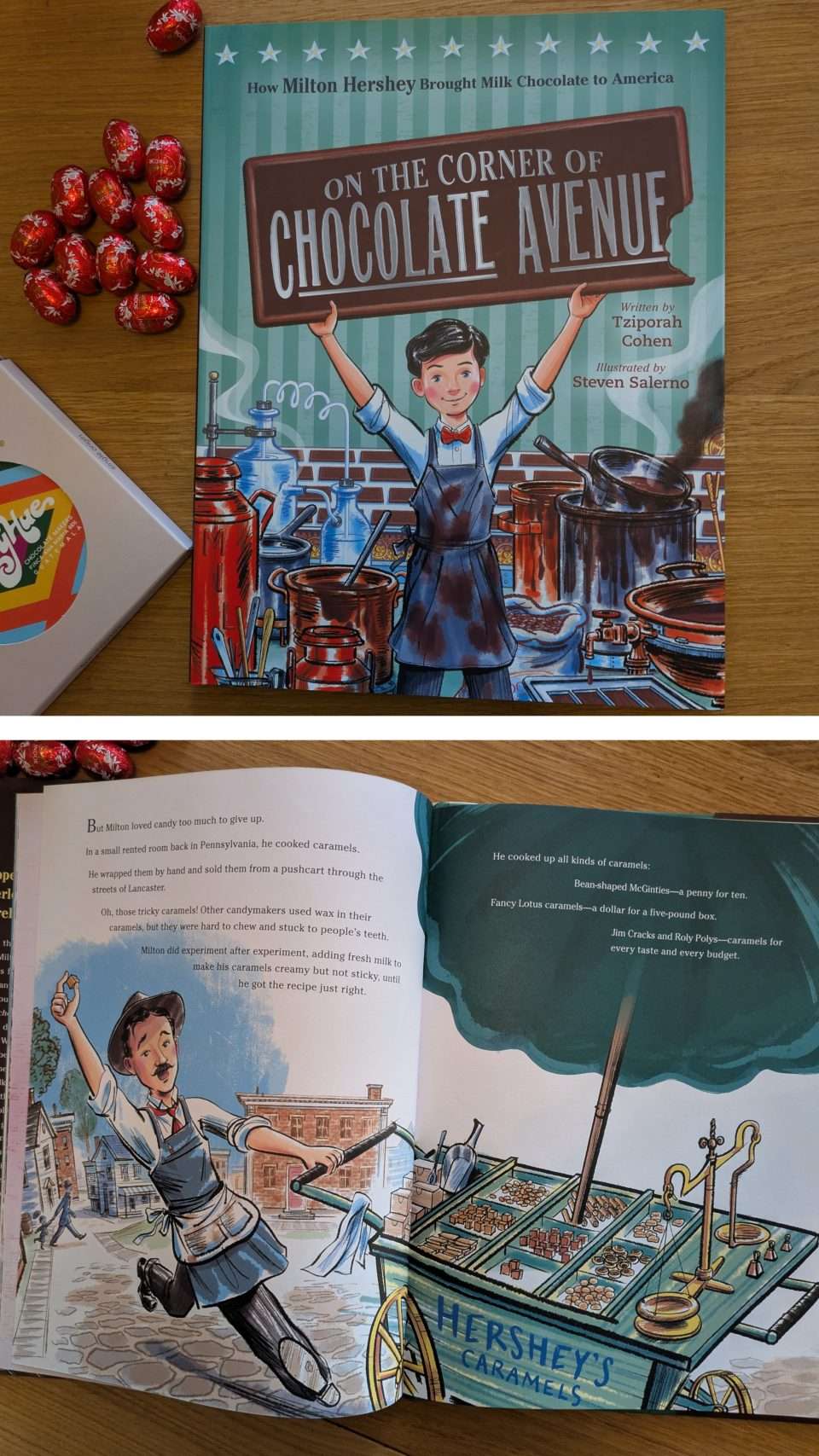
We started by reading ‘On the Corner of Chocolate Avenue: How Milton Hershey Brought Milk Chocolate to America’ and used one of the mini units from Five in a Row to work through different themes. I have enjoyed their mini units a lot in the past. Unfortunately, I didn’t think this one was quite as good as the others. We did enjoy the book though.
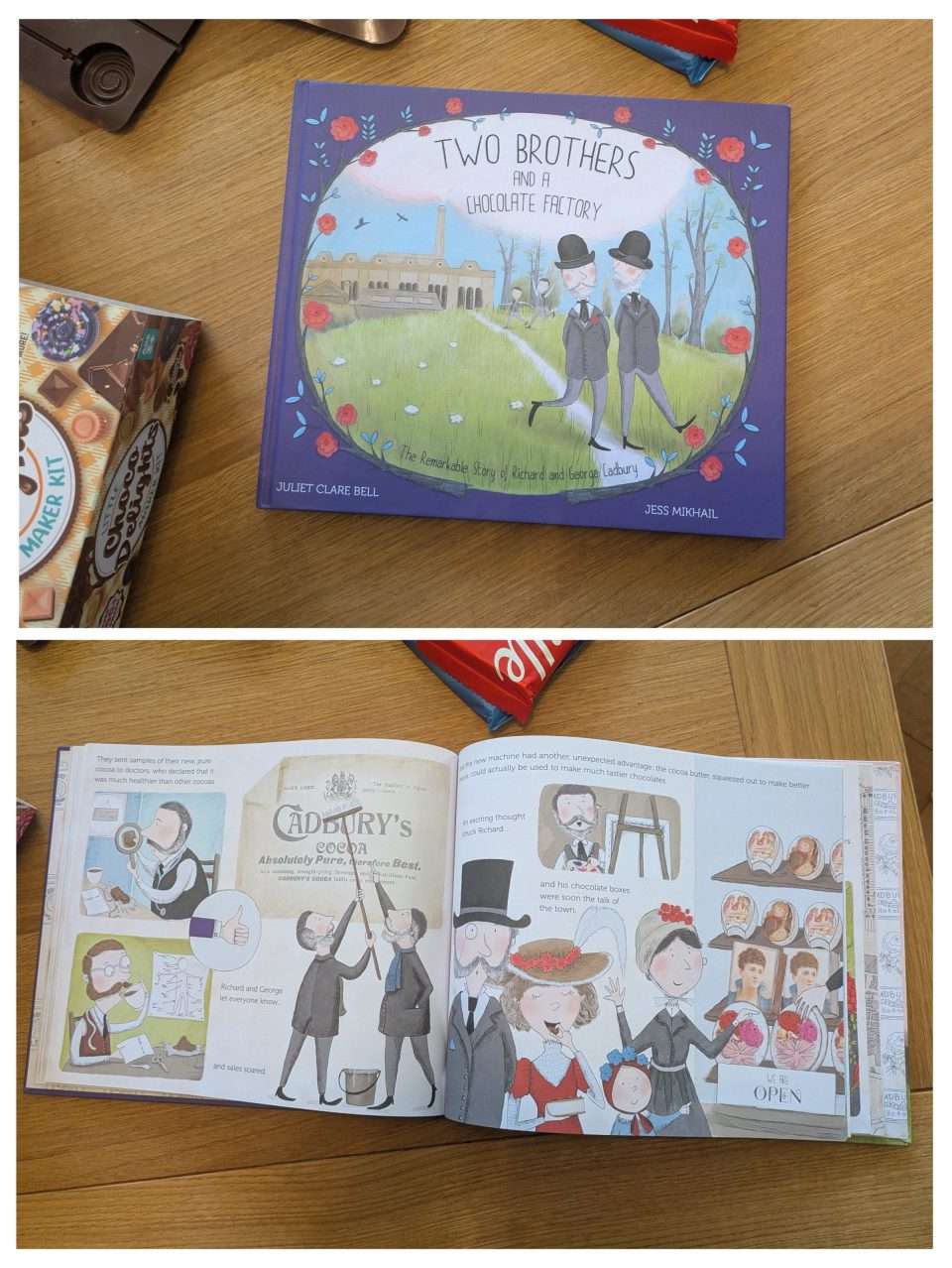
We also read ‘Two Brothers and a Chocolate Factory: The Remarkable Story of Richard and George Cadbury’ and compared the two stories. I managed to purchase some Hershey’s kisses and mini Hershey’s chocolate bars online, so the children could also compare the chocolate itself. We may be biased, but we all preferred Cadbury’s!
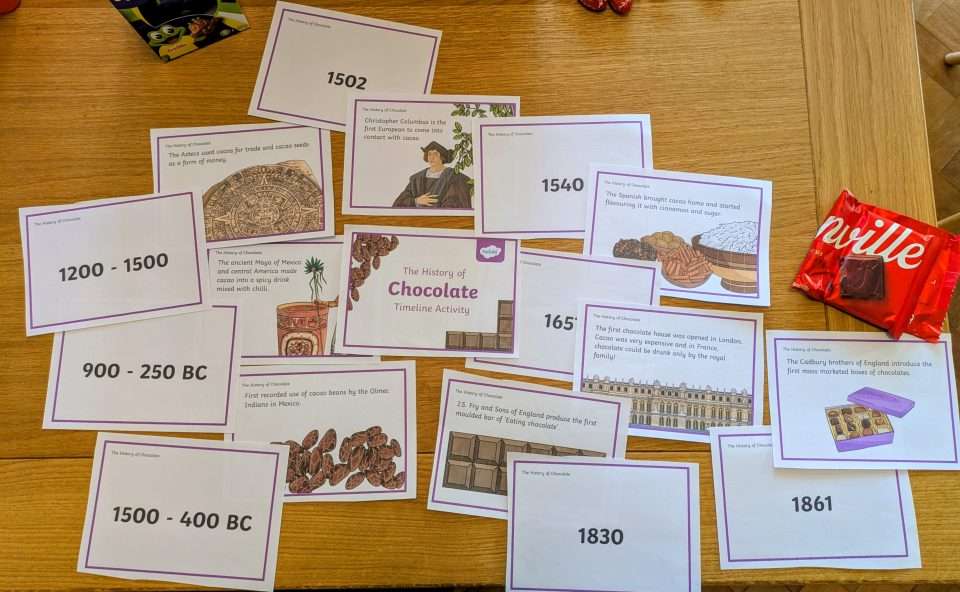
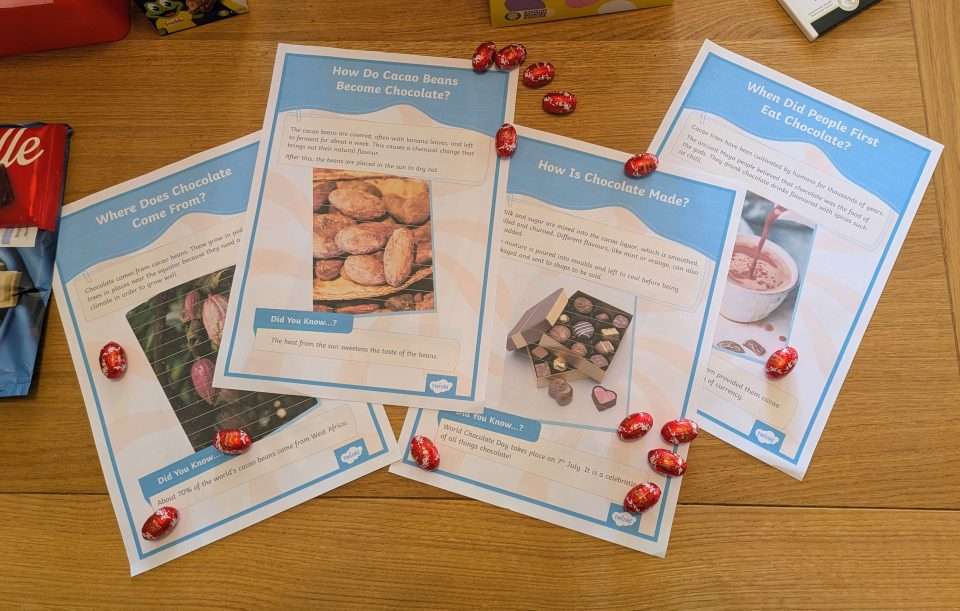
We used a number of twinkl resources to look at the history of chocolate…
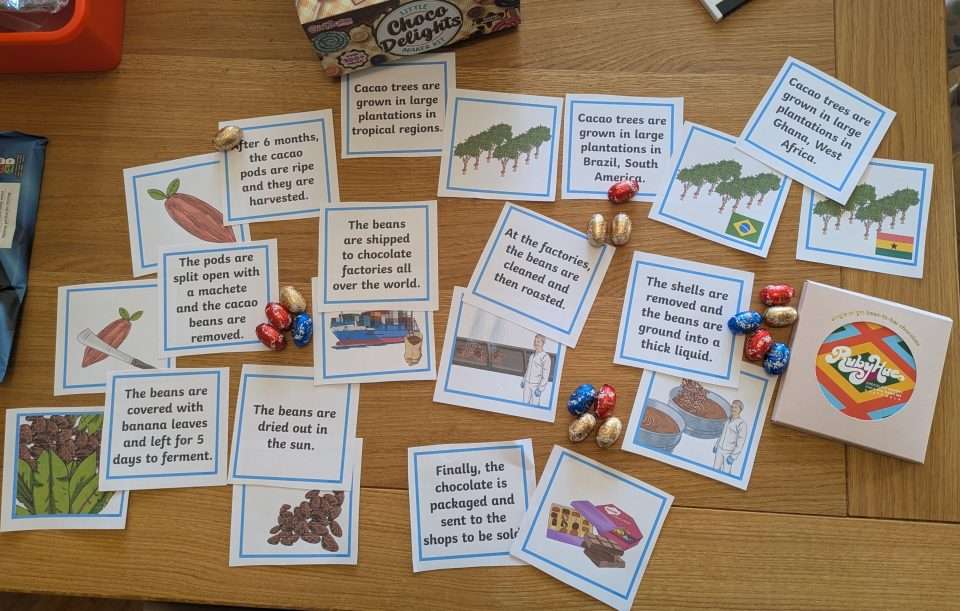
How chocolate is made…
And finally, to design our own chocolate bars…
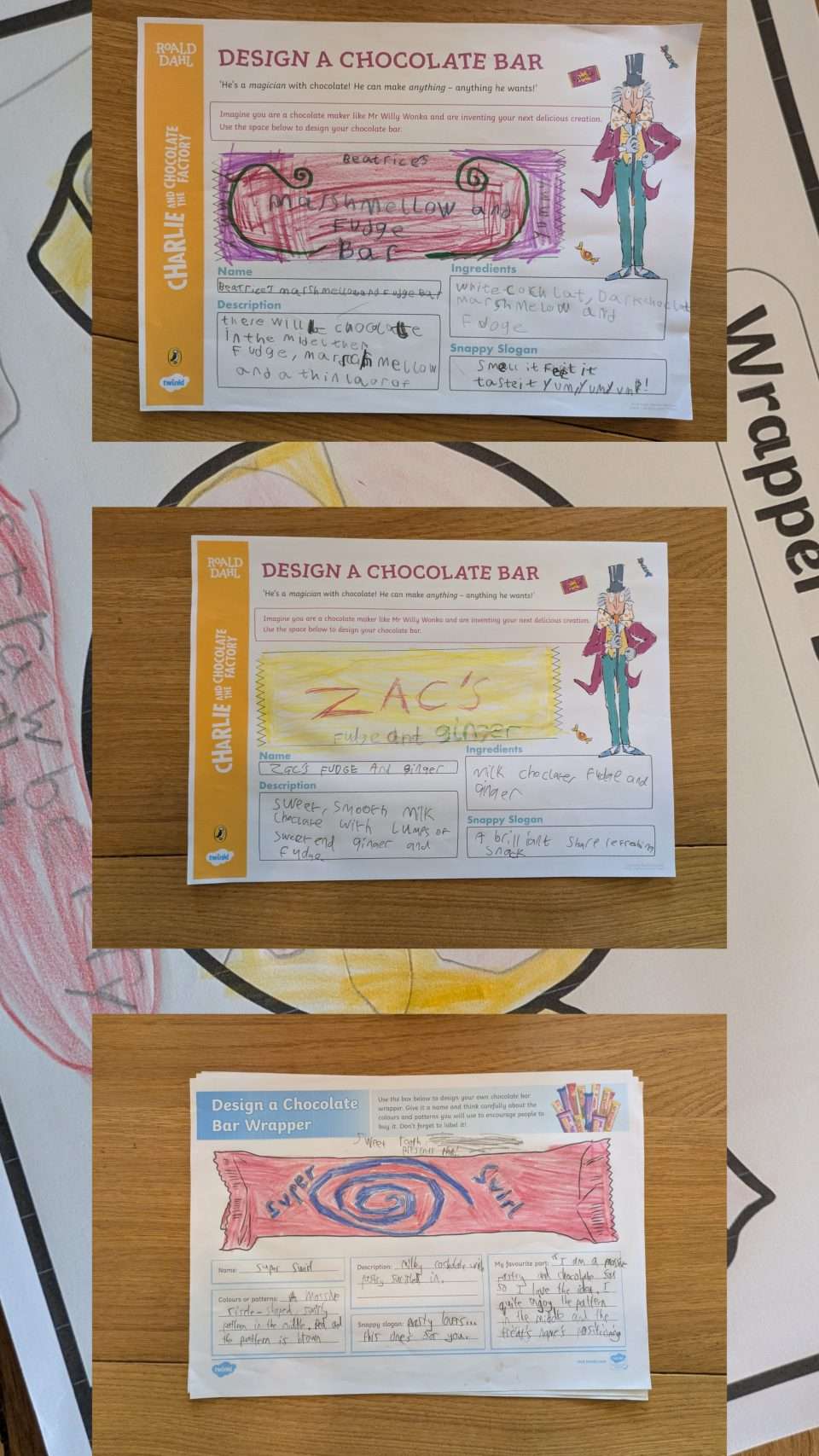
Each child designed two chocolate bars and then chose one to make. One of the recipes they came up with was crumpet crunch. We fried small pieces of crumpet in butter and sugar then coated them in chocolate. Needless to say, I think we all figured out why crumpets are not a common feature in chocolate bars! They tasted ok, but the texture was tough!
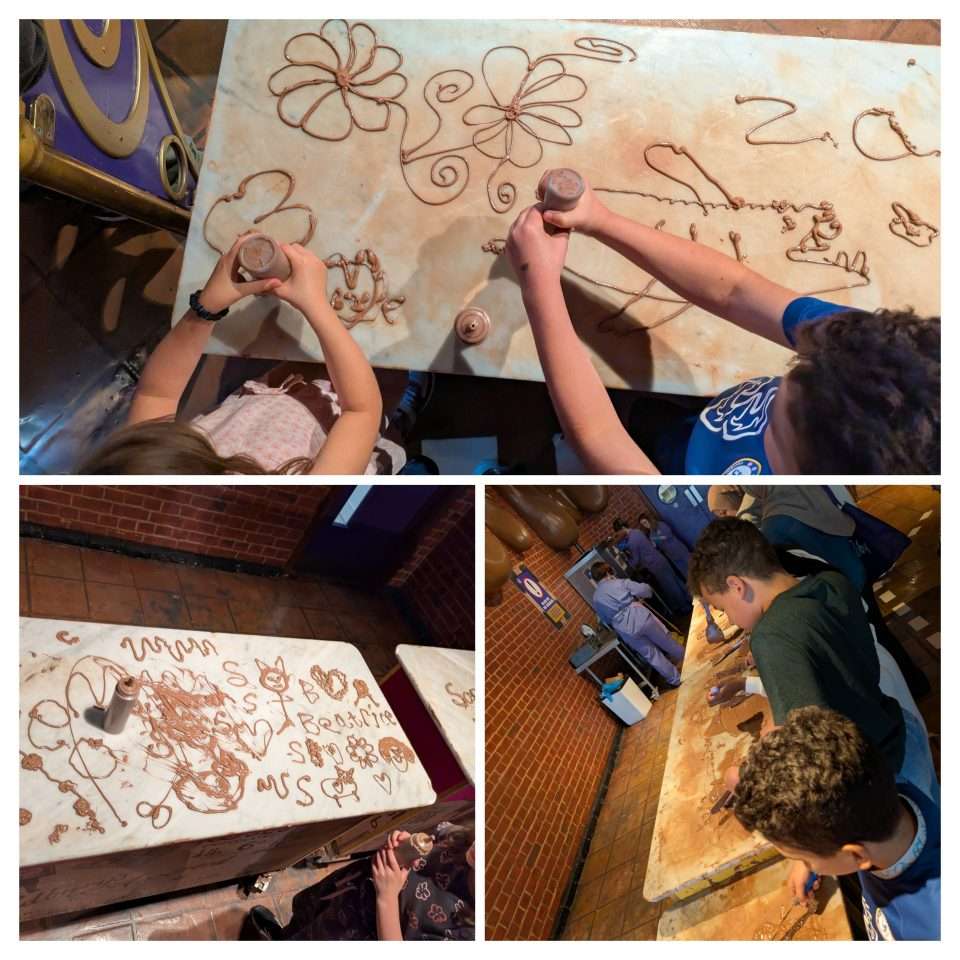
We topped all our studies off with a trip to Cadbury’s world. It was a wonderful way to bring the history of chocolate to life and review how it is made. It was particularly special that the children met their cousins there too.